W I R E C I T Y 8 6
▶ ENTER THE WIRE CITY BBSThe board is a real DOS program, not a web chat. A 1986-style terminal that speaks IPX — the same wire OWL FLY II flies on, tunneled through WebSocket — so a DOSBox in your browser, a real machine on a real LAN and the OWLOS regulars all end up on one board. Nothing to install, no account: type a handle, press ▶, you are on the wire. It is also the honest proof the network layer works: if the chat carries your line, the multiplayer sky will carry your jet.
GAMES
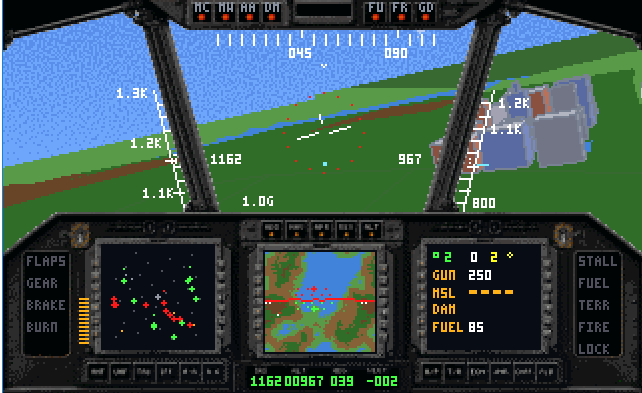
OWL FLY II 105 KB · MULTIPLAYER
The successor, on the wire: one shared sky over IPX-through-WebSocket, and no menu — you arrive watching the war through an orbit camera, and Enter takes a jet, stopped on your own runway. An F-15 SE II cockpit with NATO-shape radar, three MFD pages, recorded sound through one DMA ring, and nameplates over every human in view.
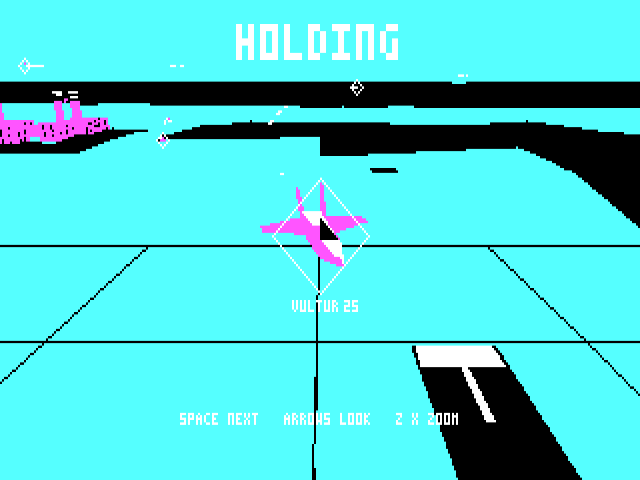
OWL FLY III THE RETRO CARDS
The third generation opens with SELECT VIDEO SYSTEM: the same war, flown the way 1988 saw it. CGA in the classic cyan/magenta, EGA in sixteen curated colours up to 640x350, VGA up to 640x480 — and a separate Hercules edition, 720x348 monochrome, dithered by density. The cockpit on every retro card is its own drawn artwork, baked offline, and the menu quizzes the machine before offering: a card the hardware has not got refuses the key.
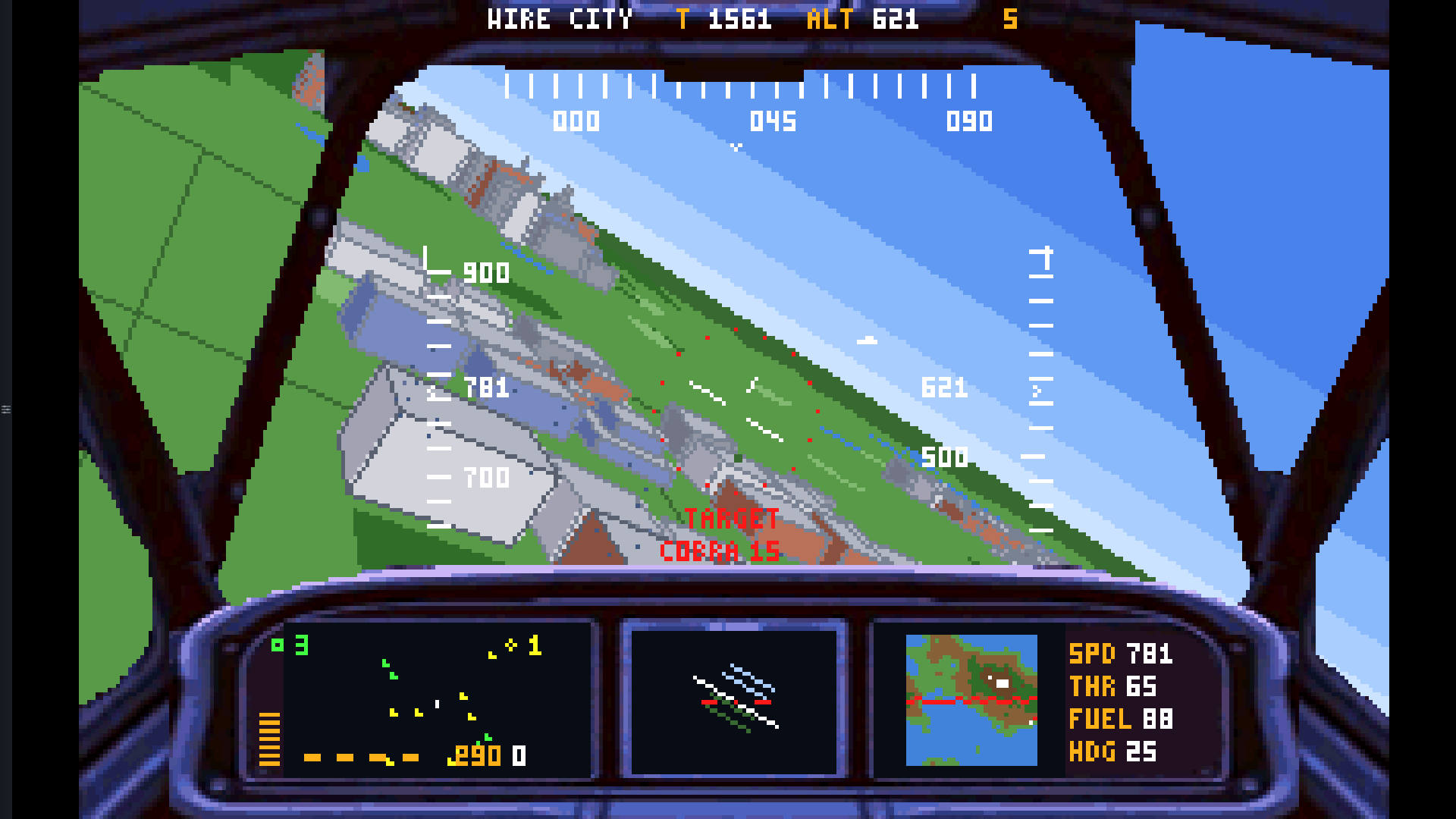
OWL FLY 40 KB
The combat flight simulator: a procedural island, a destructible city, two air forces of five aircraft types across a jagged front line, homing missiles, a photo cockpit with a working radar, and a real jet engine in one Sound Blaster channel. Fly, owl!
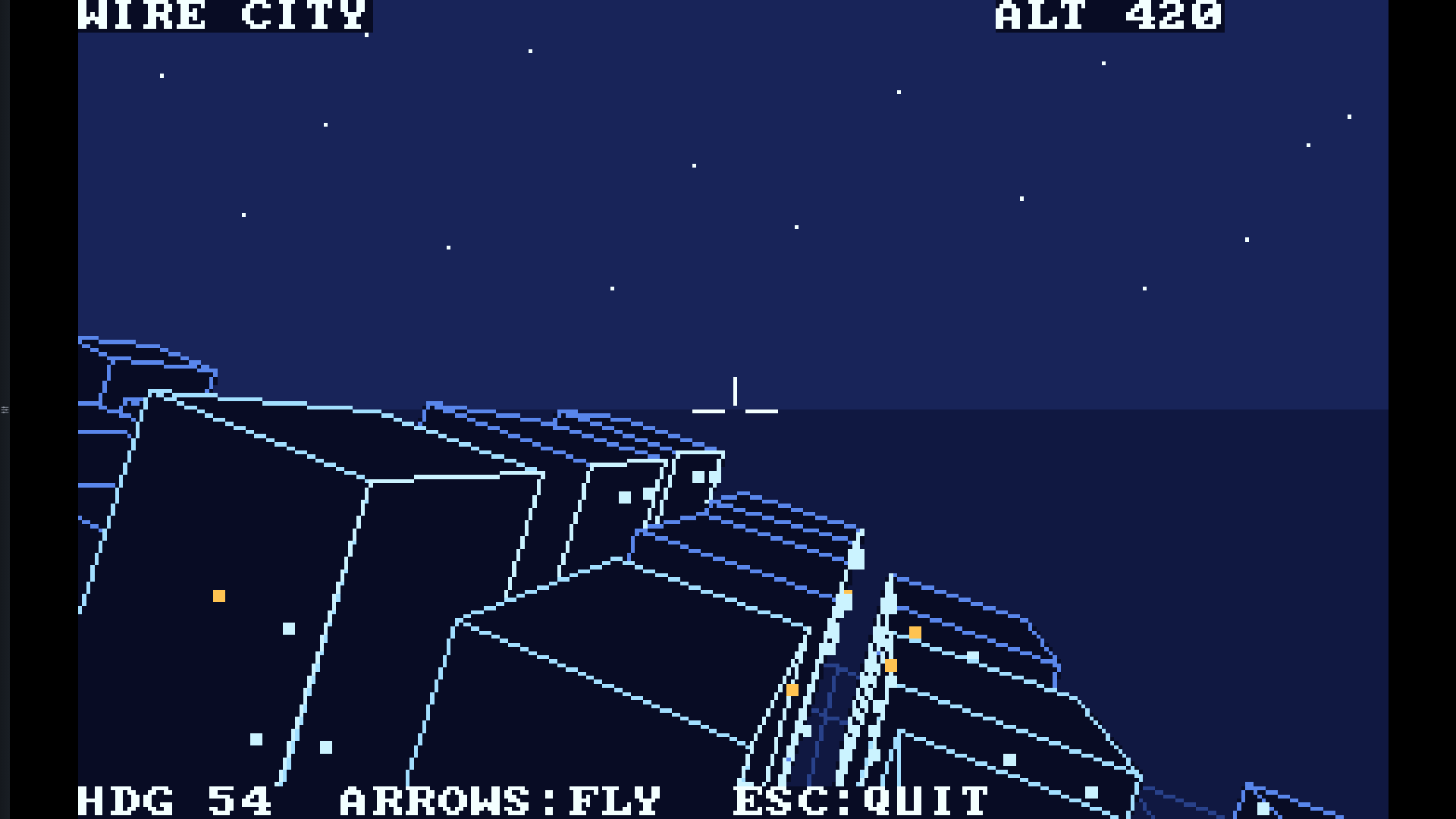
WIRE CITY 5.5 KB
The 1986-style original that started it all: a wireframe night-flight over a procedural megacity. One source file, hidden lines by the painter's algorithm, banking turns. The ancestor.
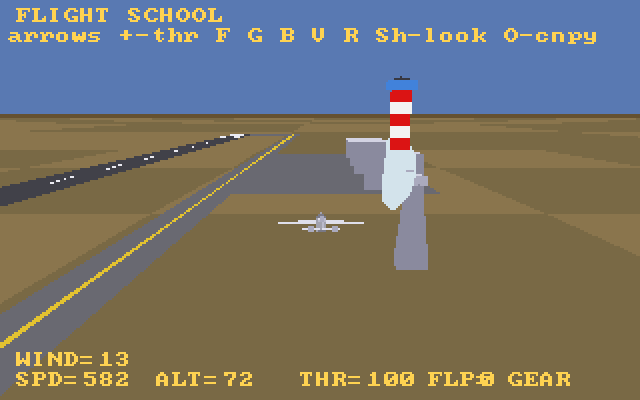
THE FLIGHT SCHOOL 27 KB
Take off, fly the pattern, grease the landing. A real airfield - numbered runway, taxiway, hangars, a control tower in obstruction stripes, a spinning radar - and a flight model that knows VR, the stall and the ground cushion. Every 3-D model rides the Blender → OBJ → 8086 precompiler pipeline.
EXAMPLES — the teaching machines: one idea each, a few KB apiece, source open
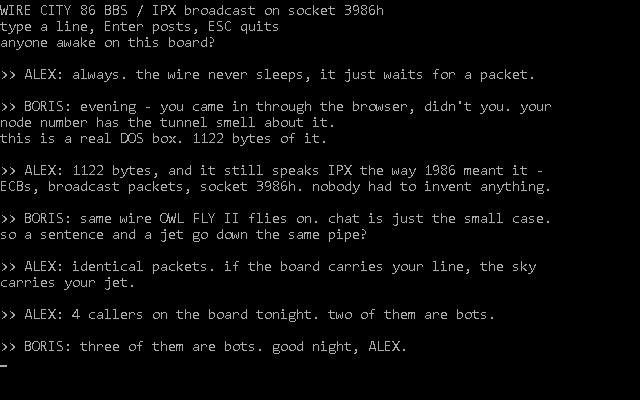
THE WIRE CITY BBS 1.1 KB · ON THE WIRE
The 1986 bulletin board, and the smallest honest network program here: a real DOS terminal that hands its lines to the IPX driver and prints what comes back. Tunneled through WebSocket, so your browser, a real machine on a real LAN and the OWLOS bots share one board. Nothing to install, no account — and it is the same wire OWL FLY II flies on.
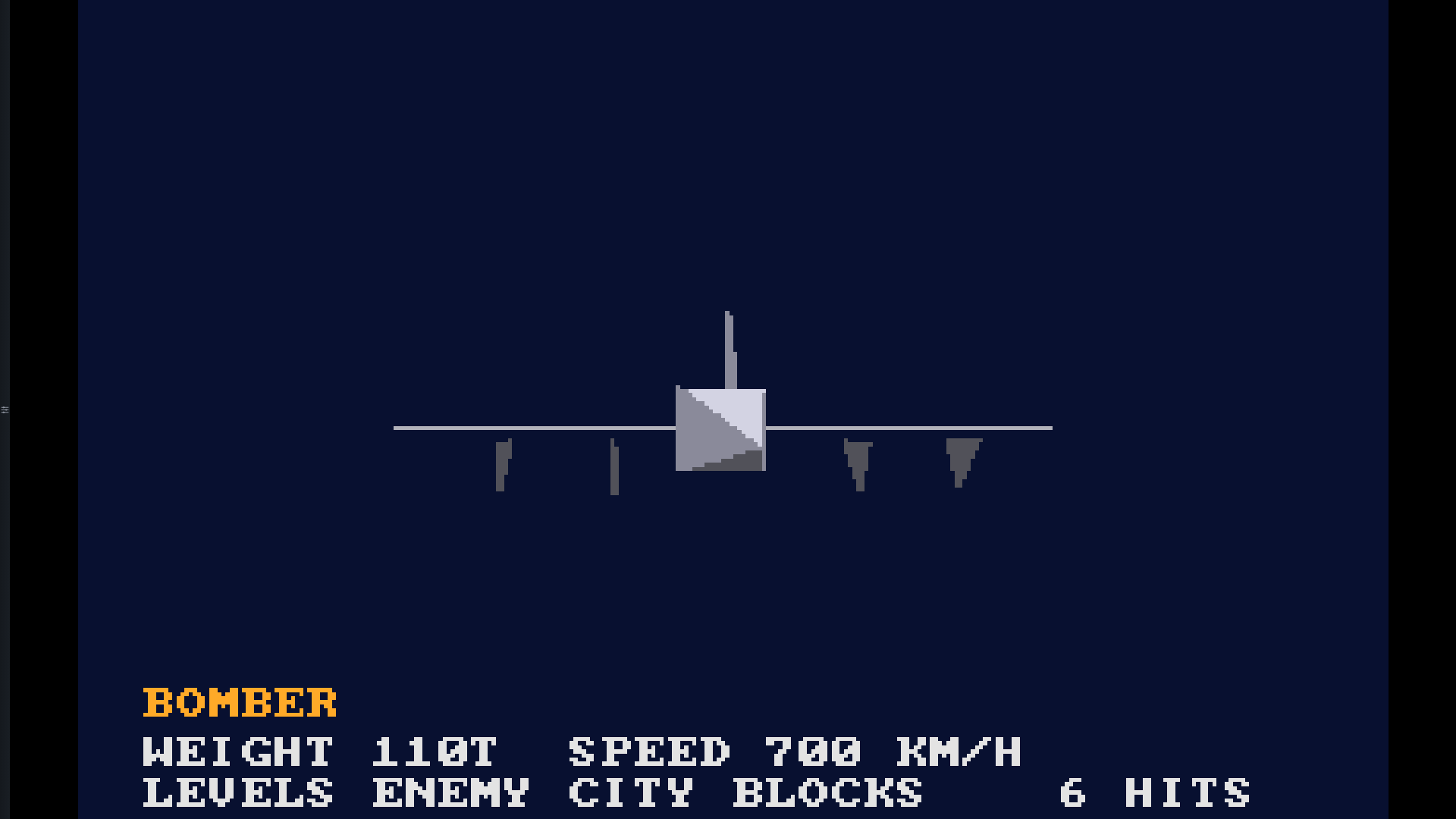
THE HANGAR 5.4 KB
All five aircraft with ROM-font spec sheets. Up/Down to cycle, arrows to spin, Space blows one apart - and the painter's sort keeps ordering the debris.
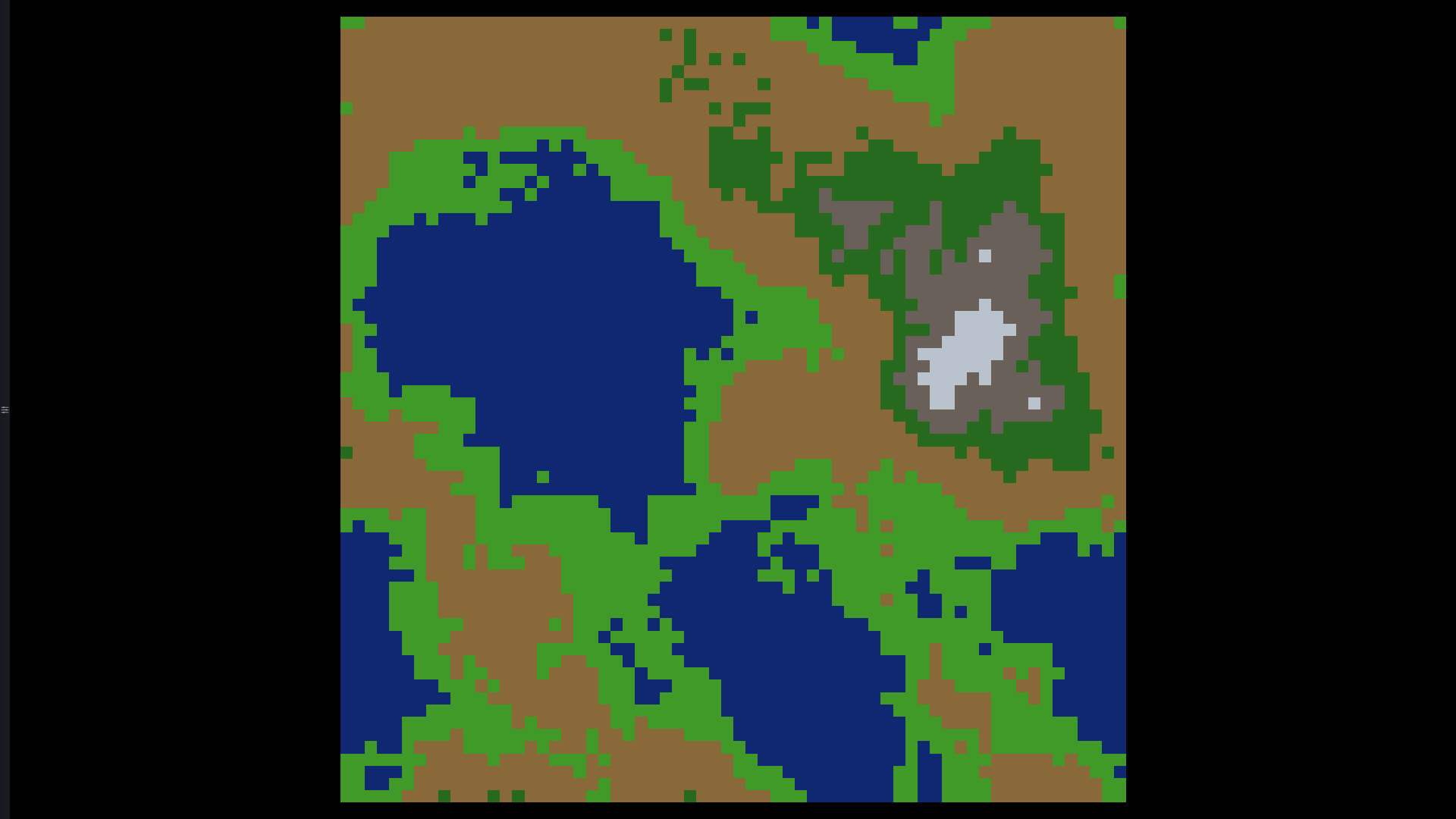
THE ISLAND FACTORY 5 KB
Diamond-Square on a torus, seeded by the clock: any key mints a fresh island. The generator the games fly over - and the one that taught us two number-theory lessons.
THE AVIONICS 3.5 KB
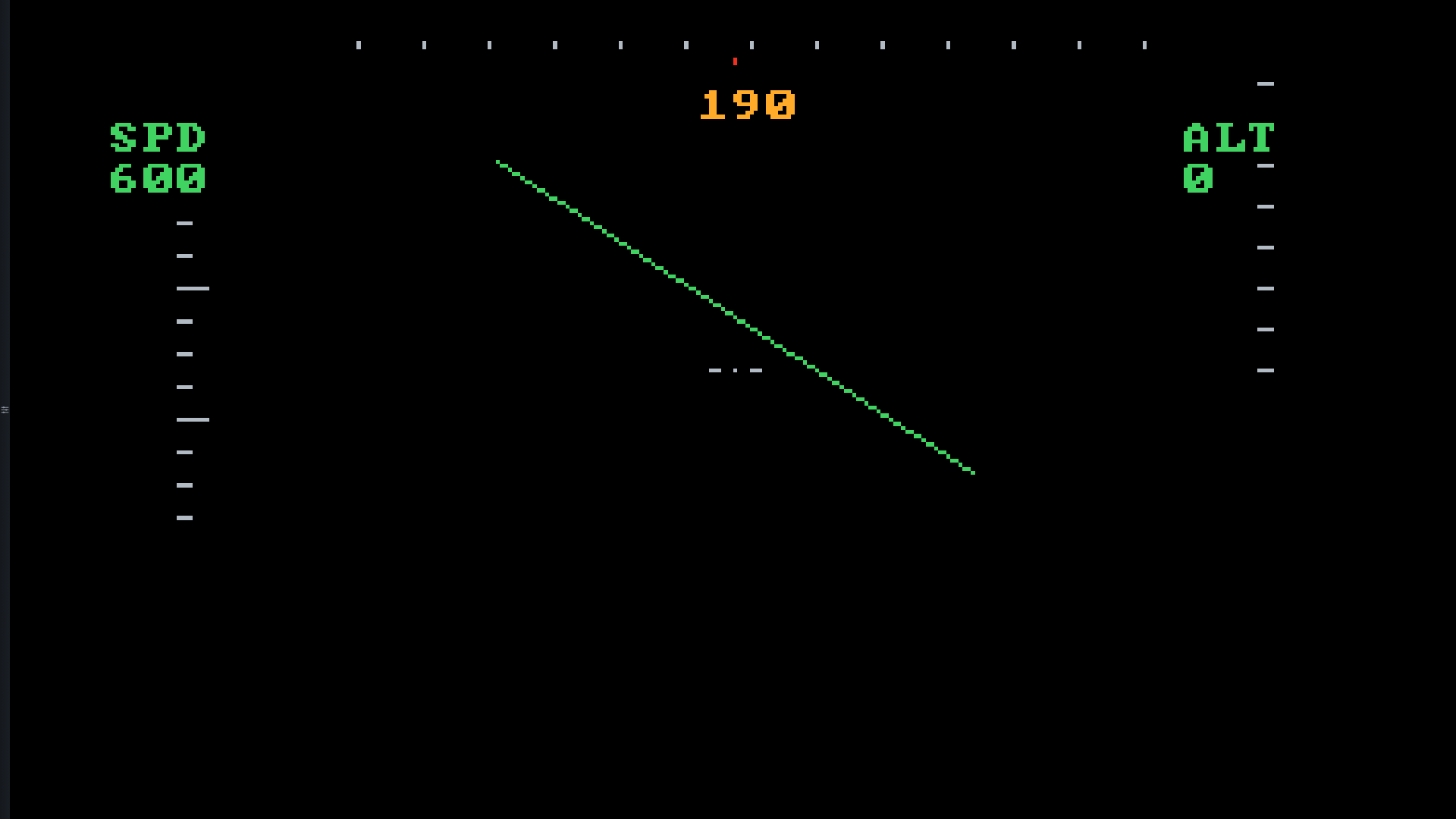
A flying instrument panel with no world attached: artificial horizon, tapes with the red stall line, a compass, a toy flight model. Arrows are the stick.
THE WIREFRAME RELIEF 16 KB · PRESS H
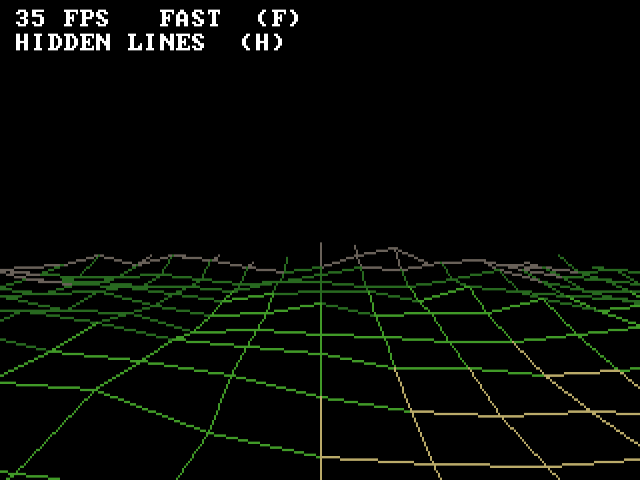
A height-mapped island drawn as a lattice, made on the spot and different every time, with an aeroplane that never stops moving. Press H and the far half stops being a fishing net: hidden lines, in one byte per screen column. Then watch the frame counter fall from 70 to 35 in a single step.
THE FIRE+SMOKE LAB 5.2 KB
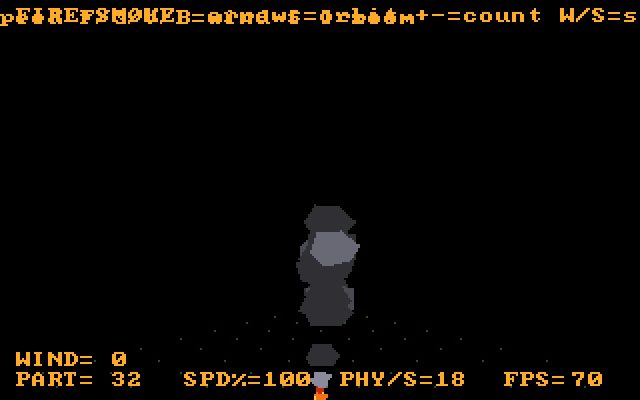
A particle laboratory: fire ages into spinning polygonal smoke puffs under buoyancy, drag, vortex and turbulence. Physics and render run on separate clocks - W/S scales physics, +/- sets the particle count, the readout shows both rates live. Orbit with the arrows, tune, discuss.
LESSONS — not a machine to play, a machine to build on: the assembler is in the tab with you
THE FILE IS THE PROGRAM 18 BYTES · ASSEMBLE IT YOURSELF
Lesson 2, with the workbench attached. Type MAKE and flat assembler — running in the same browser tab — turns three sources into three programs. Then look at what you made: eighteen bytes, all of them on one line, no header at all. Change five of them and it prints something else, while the source still says the old thing. Nothing is installed, nothing is downloaded, and reloading the page gives you a clean machine.
THE SCREEN, ONE BYTE AT A TIME 237 BYTES · SEVEN FRAMES
Lesson 3, and the first graphics written by hand. A dot, then every colour the machine has — which comes out slanted, and the slant is the proof that a screen is one long row of bytes and not a grid. Then a clear, two lines that cost wildly different amounts, a square drawn on top of them that removes nothing, and two hundred more. Type MAKE, then change a number and type it again.
THE GROUND STOPS BEING FLAT 16 KB · PRESS H
Lesson 15, and the first one built out of the game's own engine. Every node of the lattice asks the island how high it is — and then a hill is in the way of what is behind it. H switches on hidden lines: one byte for each of the 320 screen columns, and the far half of the picture stops being a fishing net. Watch the frame counter fall from 70 to 35 in one step, because there is no 60 on this machine. Then EDIT RELIEF.ASM and change the one number in it that is not the game's.
THE GROUND BECOMES A SURFACE 37 KB · DIVE
Lesson 16. Every square is filled now and painted far to near, so the near hill covers the far one without a single test. The ground can end the flight. And the view reaches twice as far — which broke a 16-bit word the moment the square block turned forty five degrees, so the view became a circle. Three speed-ups after that, each one measured, and one of them bought almost nothing.
A TOWN ON THE GROUND 49 KB · N FOR NIGHT
Lesson 17. Blocks of sixteen houses on the flat squares of the island, placed by a hash so the town plan costs no memory, and you take off facing the biggest town. The island is exactly one 16-bit word wide, so everything else was halved — and the position got a byte of fraction, carried with ADC. Every window is as big as it really is on the screen. And N is night: nothing but the palette.